
The call from Jamie
Jamie runs a small community television studio in the south-west. He got in touch in the early autumn because his weekly magazine programme looked uneven on screen. The presenter's face was warm and orange on the left of the desk and almost blue on the right, and the backdrop had a dark patch behind the guest chair that no amount of camera adjustment would fix.
He had a modest budget, a low ceiling and a mixed bag of fixtures collected over several years. Some were tungsten lamps, a few were LED panels bought second-hand, and one was a work light that had simply never been removed. He asked whether we could look at the set and tell him what to change first.
Amelia, writing this, visited the studio on a quiet weekday morning, when the room was empty and there was time to switch everything on and walk the floor with a notebook and a colour meter.
What we found on the first visit
The first thing we measured was colour temperature. The tungsten fixtures sat close to 3200K, while the LED panels were set to a cooler daylight value, and a window blind let in uneven light from the street. Mixing those sources on one face was the main reason for the split tone Jamie had noticed.
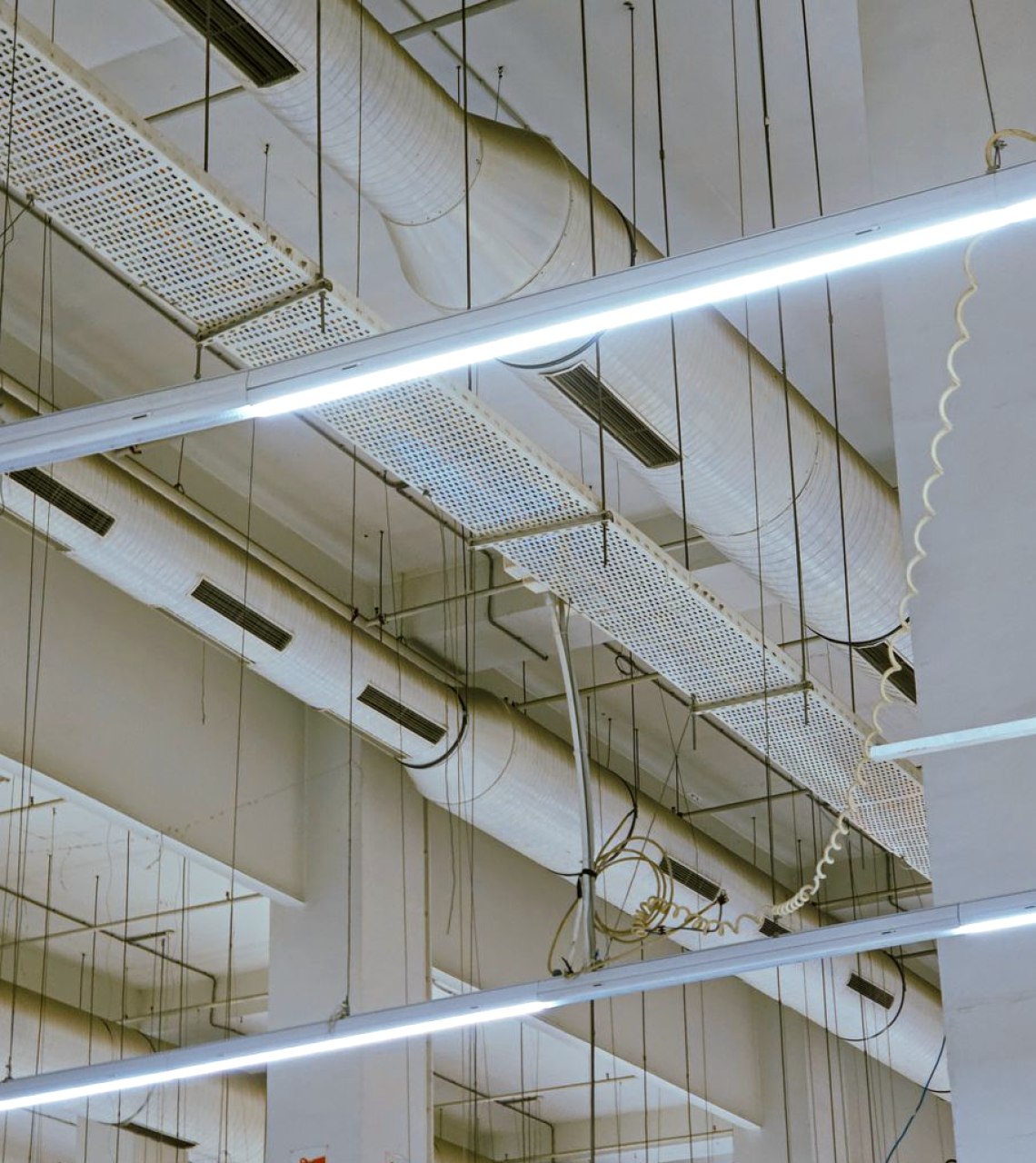
Rigging was the second issue. Fixtures hung from a single scaffold bar at one height, so every light came from the same angle and cast flat, hard shadows on the backdrop. Two of the lamps were pointed so steeply that the guest chair sat in a pool of shadow cast by the presenter.
We also noted cable runs across the floor and a quiet hum from a cheap dimmer. None of this was unusual for a studio built up piece by piece. It simply needed to be written down in order of importance.
- Mixed tungsten and daylight sources on the same subject
- One rigging height and one lighting angle for the whole set
- Window light changing through the day
- Floor cabling and an elderly dimmer
Choosing one colour temperature
Our advice was to settle on a single colour temperature for everything that lit people and set. Jamie's cameras were already balanced for warm studio light, and replacing a few LED panels was cheaper than replacing every tungsten head, so we recommended setting the adjustable panels to match the existing fixtures and blocking the window completely.
This is a plain decision, but it is the one that changes the picture most. Once every source agrees, the white balance on the cameras holds across the whole desk, skin tones stay consistent between shots, and the vision mixer no longer has to correct colour live.
We asked him to check the panels with the meter each time a lamp was replaced, and to keep a written note of the chosen value pinned in the control room so that whoever rigs the studio next follows the same setting.
Reworking the rig and the angles
For the rig we proposed a second bar at a different height and a simple three-point arrangement for the presenter's desk: a key light slightly to one side, a softer fill on the other, and a backlight to separate shoulders from the backdrop. The guest chair received its own key, so nobody sat in anyone else's shadow.
Backdrop lighting was kept separate from the people lighting, with two fixtures angled to wash the wall evenly and remove the dark patch. We sketched the positions on a floor plan with distances and heights, so that the fixtures could be moved by Jamie and a volunteer without us on site.
Throws and angles were chosen to keep the lamps out of camera view and away from the boom shadow. Where a fixture could not move, we suggested barn doors or a flag rather than a new purchase.
Power, heat and the old dimmer
Power was the quiet part of the plan. Adding fixtures to the same circuit as the kettle and the edit computers is a common mistake in small studios, so we totalled the wattage of the proposed lamps and compared it with what the circuits could safely supply. Moving the backdrop lights to a separate circuit left a comfortable margin.
Tungsten heat was a practical concern in a low room. We suggested swapping two of the highest-wattage heads for LED equivalents set to the agreed colour temperature, which cut both the heat and the load, and meant the air conditioning no longer fought the lamps during a long recording.
The humming dimmer was replaced with a unit rated for the new load. Jamie arranged an electrician for the circuit change, as we advise in every case: we plan the lighting, but mains work belongs to a qualified person.
- Total wattage compared with circuit capacity
- Backdrop lights moved to their own circuit
- Two hot heads swapped for LED at the same colour temperature
- Mains changes carried out by an electrician
How the studio looked afterwards
A few weeks later Jamie sent a recording of the next programme. The presenter's face was even from edge to edge, the guest chair was lit properly, and the backdrop had a smooth, quiet tone behind both of them. He said the vision mixer had stopped reaching for the colour controls, which pleased him more than any individual fixture.
Nothing in the plan was expensive or unusual. It relied on measuring first, deciding on one colour temperature, giving the lights different heights and jobs, and checking the power before anything was added to the circuit.
What stays with me from the visit is how quickly a small set improves when the changes are written down in order, with positions and values, so that the next person to rig the room can repeat them.
Jamie's studio did not need new equipment so much as a clear plan: one colour temperature, a second rigging height, separate backdrop lighting and a sensible look at the circuits. If your own set looks uneven or runs hot, start by measuring what you have and writing the positions down. Small, ordered changes tend to hold better than a large purchase made in a hurry, and they leave the studio easier to rig next time.
Amelia Fox
Lighting and Audio SpecialistAmelia covers stage lighting plans and audio synchronisation. She also runs our training workshops.